
If you want to reduce AC electricity bill in India, the biggest factors are temperature settings, usage habits, and maintenance.
You get your electricity bill in summer. The number is higher than what you expected. Much higher. You look at the AC and wonder if running it is even worth it.
This feeling is common across India from March to July. The good news is that small changes in how you use and maintain your AC can lower the bill. The bad news is that some popular advice you see online does not work for Indian homes.
This guide focuses on practical changes. No expensive upgrades. No unrealistic suggestions like “don’t use AC.” Just real habits and maintenance steps that actually move the number on your bill. If your goal is to reduce AC electricity bill in India, these small changes make a noticeable difference over time.
If you’re unsure how much your AC actually consumes, start with how much electricity a 1.5 ton AC consumes per month.
Table of Contents
Mistakes that increase AC electricity bill in India
To reduce AC electricity bill in India, you must first identify habits that increase power consumption.
Before talking about solutions, it helps to know what goes wrong. Many homes do a few things that make the AC work harder than needed.
Mistake 1: Setting the temperature too low
Many people set the AC to 18 degrees Celsius or 20 degrees Celsius. They think lower temperature means faster cooling. The AC works continuously to reach that temperature. In Indian summer, outdoor temperatures are often 35 to 42 degrees. A standard AC cannot realistically maintain 18 degrees in most rooms. It keeps running at full power and never gets a break. This can increase electricity consumption compared to moderate settings.
This is one of the biggest reasons explained in why your electricity bill is high in summer.
Mistake 2: Turning AC off when leaving for short periods
Some people turn off the AC when stepping out for 30 to 60 minutes. When they return, the room is hot again. The AC then works at full power for 15 to 20 minutes to cool it down. This restart consumes more electricity than leaving the AC running at a moderate setting.
Mistake 3: Ignoring filter cleaning
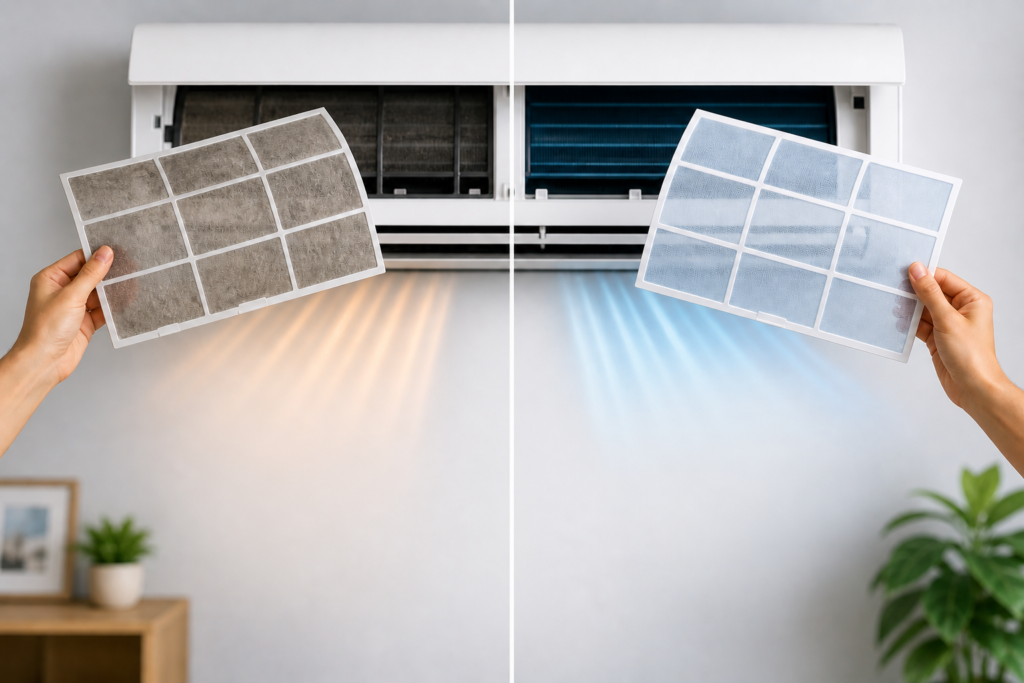
A dirty filter blocks airflow. The AC fan works harder. The cooling effect reduces. The compressor runs longer to achieve the same temperature. This adds 5 to 15 percent to electricity consumption depending on how dirty the filter is.
Mistake 4: Not using fans with AC
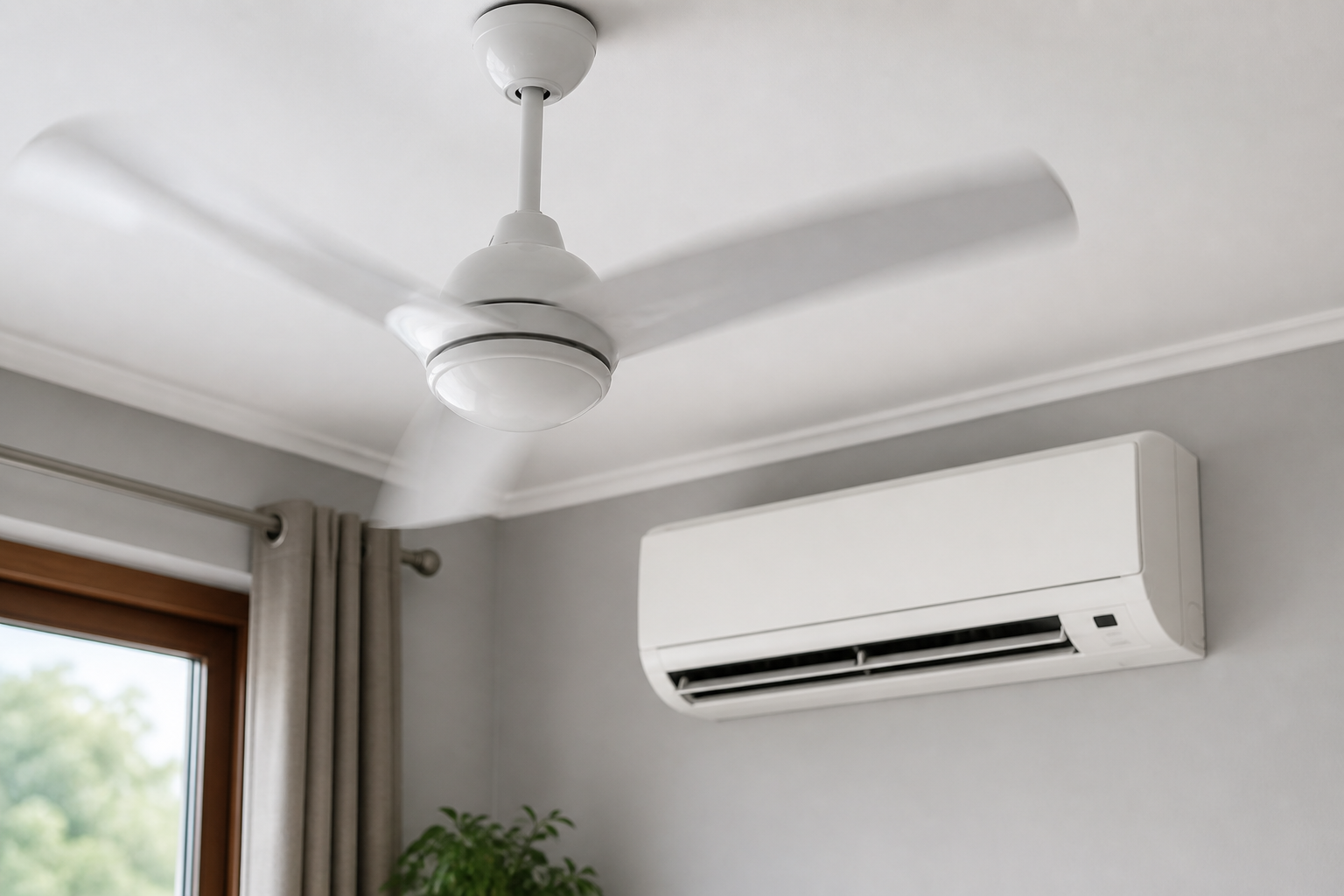
Ceiling fans are not just for rooms without AC. Running a ceiling fan on medium speed while the AC is on allows you to set the AC temperature higher. Moving air feels cooler on skin. You can set AC to 26 or 27 degrees and still feel comfortable. The fan consumes very little electricity compared to the AC compressor.
Mistake 5: AC placed in direct sunlight
When the outdoor unit is exposed to afternoon sun, it gets hotter. The compressor has to work harder to reject heat outside. This increases electricity consumption. The difference can be 5 to 10 percent depending on exposure.
Mistake 6: Running AC in a room with open windows or gaps
Cool air escapes. Hot air enters. The AC never reaches the set temperature. This is one of the biggest wastages but also the easiest to fix.
The temperature myth – 18 degrees versus 24 degrees
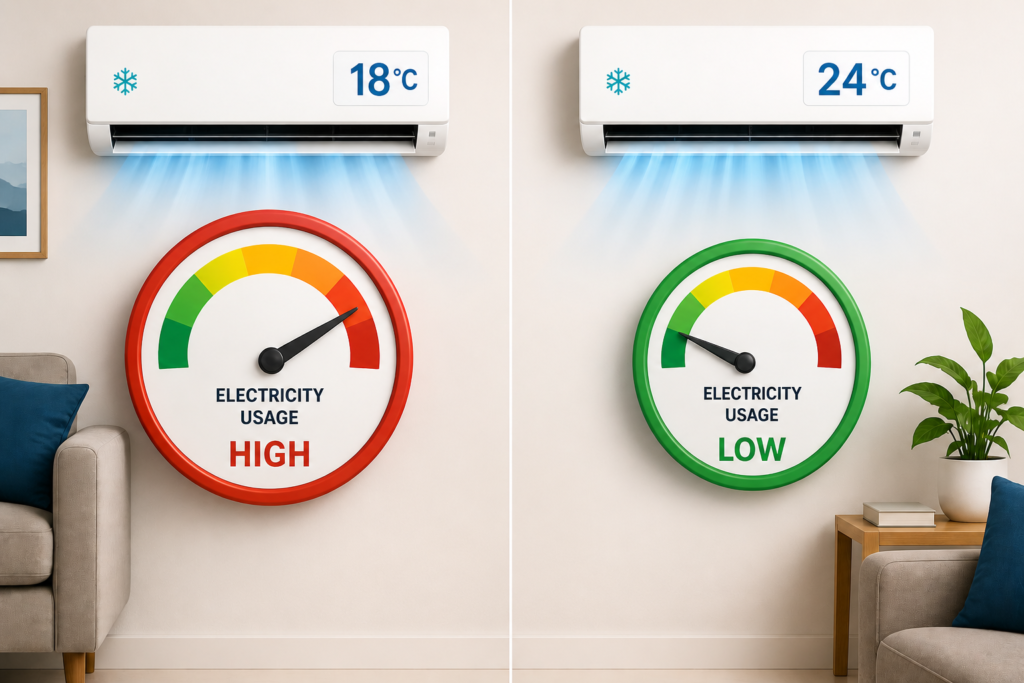
There is a common belief that setting the AC to 18 degrees cools the room faster. This is not how ACs work. This is one of the most misunderstood factors when trying to reduce AC electricity bill in India.
An AC cools at the same speed regardless of the set temperature. The difference is how long it runs. When you set to 18 degrees, the AC runs continuously because it may never reach that temperature. When you set to 24 degrees, the AC reaches that temperature faster and then cycles off or runs at reduced power (in inverter models).
What happens at different temperature settings
| Set temperature | AC behaviour | Relative electricity use |
|---|---|---|
| 18 to 20 degrees | Compressor runs continuously for hours. May never reach target. | Very high |
| 21 to 22 degrees | Compressor runs most of the time. Reaches target only at night if outdoor temperature drops. | High |
| 23 to 24 degrees | Compressor runs for shorter periods. Reaches target during operation. | Medium |
| 25 to 27 degrees | Compressor cycles off regularly. Inverter AC runs at low power. | Low |
Understanding this properly can reduce long-term costs more than choosing between models like split AC vs window AC cost comparison.
The Indian government’s Bureau of Energy Efficiency (BEE) recommends 24 degrees Celsius as the default setting for ACs. Many ACs now come with a 24 degree default button for this reason. Bureau of Energy Efficiency AC guidelines.
What temperature actually works for Indian homes
- Daytime when outdoor temperature is 35 to 40 degrees: 24 to 26 degrees is comfortable for most people when used with a ceiling fan.
- Nighttime when outdoor temperature drops to 28 to 32 degrees: 25 to 27 degrees is sufficient.
- For elderly people or infants: 26 to 27 degrees with a fan is often adequate.
Each degree lower than 24 degrees increases electricity consumption by roughly 3 to 6 percent. Going from 24 to 18 degrees can increase your AC electricity bill by 20 to 30 percent.
Habits to reduce AC electricity bill in India
These habits are the most effective ways to reduce AC electricity bill in India in daily use.
Small changes in daily habits add up over a month. These are not difficult to follow. They just require awareness.
Keep doors and windows closed
This seems obvious. But in many Indian homes, people run the AC while keeping balcony doors slightly open for fresh air. Or the kitchen door is open. Or the window has a gap because of old seals. Check your room before turning on the AC. Close everything.
Use timer and sleep modes
Most ACs have a timer function. Set the AC to turn off 30 to 60 minutes before you wake up. The room stays cool enough. The AC does not run unnecessarily in the early morning when outdoor temperature is lower.
Sleep mode gradually increases the temperature by 1 to 2 degrees over a few hours. You do not notice the change while sleeping. But the AC consumes less power through the night.
Close curtains or blinds
Sunlight coming through windows heats up the room. The AC has to remove this heat. Closing thick curtains or blinds during the day reduces this heat load. The difference is noticeable in rooms with west facing windows in the afternoon.
Do not cool empty rooms
If you are the only person in a 3 bedroom home, cool only the room you are in. Close the doors to other rooms. The AC does not have to work against heat coming from other parts of the house.
Pre cool the room if you have solar panels
If your home has solar panels, run the AC for 30 minutes in the afternoon when solar generation is high. Then turn it off. The room stays cool for 1 to 2 hours depending on insulation. This works best for homes with good wall and roof insulation.
Avoid placing heat sources near AC thermostat
If your AC has a remote thermostat (some modern units), do not place lamps, chargers, or other warm devices near it. The AC may sense the local heat and keep running longer than needed.
Electricity usage depends heavily on setup, which is why AC installation cost in India full breakdown also affects efficiency.
How electricity units are calculated in India: https://www.tatapower.com/ezhome/energy-calculator
Maintenance impact on AC electricity bill in India
Regular maintenance is essential to reduce AC electricity bill in India over the long term.
A poorly maintained AC can consume 10 to 25 percent more electricity than a well maintained one. Maintenance is not just about avoiding breakdowns. It directly affects your monthly bill.
Filter cleaning (every 2 to 4 weeks)
This is the single most important maintenance task. Most split ACs have filters behind the front panel. They slide out. Wash them with water. Let them dry. Put them back. This takes 5 minutes. A clean filter improves airflow and reduces electricity use by 5 to 10 percent.
Poor maintenance is also a common cause in AC not cooling repair cost in India guide.
Coil cleaning (every 6 to 12 months)
The indoor coil (evaporator) and outdoor coil (condenser) collect dust over time. A dirty coil reduces heat exchange. The compressor runs longer. This task requires a technician for outdoor coil cleaning on split ACs. Expect to pay ₹500 to ₹1000 for coil cleaning during annual service.
Checking for gas leaks
Low refrigerant gas makes the AC work harder. Cooling reduces. Electricity consumption increases. If your AC is more than 3 years old and cooling has slowly reduced, a gas top up may be needed. But gas does not evaporate. If gas is low, there is a leak. Ask the technician to find and fix the leak before adding gas.If repair costs start increasing, it’s better to evaluate AC repair vs replacement – which saves more money.
Ensuring proper drainage
If water is not draining properly from the indoor unit, efficiency drops. The AC may freeze internally in some cases. Check that the drain pipe is not blocked or kinked.
Outdoor unit placement
If your outdoor unit is in direct sunlight for most of the day, consider providing shade. Do not block airflow around the unit. A simple shade cover or a small roof above the unit (leaving gaps for air circulation) can reduce the temperature around the compressor. This helps in rooftop installations especially.
Ignoring maintenance makes it harder to reduce AC electricity bill in India even if your usage is correct.
How much you can reduce AC electricity bill in India
This example shows how consistent habits help reduce AC electricity bill in India over a full season. Let us look at a realistic example. These numbers are estimates for a typical Indian home.
Example home:
- 1.5 ton 3 star split AC
- Used for 8 hours per day
- Electricity rate of ₹7 per unit
- 6 months of AC use per year (May to October in many parts of India)
Scenario A: No changes (common mistakes included)
- Temperature set to 20 degrees
- Filter cleaned once a year
- Curtains open during day
- No ceiling fan with AC
- Estimated monthly units: 380 to 420
- Estimated monthly bill: ₹2660 to ₹2940
- Estimated annual cost (6 months): ₹15,960 to ₹17,640
Scenario B: With improvements
- Temperature set to 24 degrees
- Filter cleaned every 3 weeks
- Curtains closed during day
- Ceiling fan on medium speed
- Windows and doors properly closed
- Monthly units: 260 to 290
- Monthly bill: ₹1820 to ₹2030
- Annual cost (6 months): ₹10,920 to ₹12,180
These savings become even more important if your AC is older or inefficient, similar to what’s discussed in AC service cost in Chennai breakdown.
The difference
- Monthly savings: ₹840 to ₹910
- Annual savings (6 months): ₹5040 to ₹5460
These savings are for one AC. Homes with two or three ACs can save proportionally more.
What about inverter ACs
Inverter ACs adjust compressor speed based on cooling need. The difference between poor habits and good habits is smaller for inverter ACs but still significant. For a 5 star inverter AC, the savings from temperature setting and maintenance might be ₹3000 to ₹4000 per year instead of ₹5000.
If you only do 3 things, do this
- Set temperature to 24–26°C
- Clean filters every 3–4 weeks
- Use fan with AC
These changes can reduce your bill significantly depending on usage and conditions.
Practical checklist for reducing AC electricity bill
Here is a simple checklist. Go through this once a week during summer.
Daily habits
- Set temperature to 24 to 26 degrees
- Run ceiling fan on medium speed
- Keep windows and doors closed
- Close curtains on sunny sides of the house
- Do not turn AC off for short breaks under 1 hour. Use a moderate setting instead.
Weekly tasks
- Check if any window or door has gaps
- Ensure AC drain pipe is dripping properly (indicates operation)
- Wipe the AC front panel to prevent dust buildup
Monthly tasks
- Open front panel. Remove and wash filters.
- Check outdoor unit for leaf or dust buildup around it
Yearly tasks (before summer starts)
- Schedule a technician visit for coil cleaning
- Check gas pressure
- Ensure outdoor unit stand is stable and not vibrating
Following this checklist regularly helps reduce AC electricity bill in India in a predictable way.
Does turning AC off at night help
Some people turn off the AC after 2 or 3 hours of sleep. They think this saves electricity. The result depends on outside temperature.
When outdoor temperature drops below 28 degrees at night (common in many Indian cities after midnight), the room stays cool for 1 to 2 hours after the AC turns off. In this case, turning off the AC for the last 2 to 3 hours of the night saves electricity.
When outdoor temperature stays above 30 degrees through the night (common in coastal cities like Chennai, Mumbai, Kolkata), the room heats up quickly after the AC turns off. Turning it back on an hour later consumes more power than keeping it running at a moderate setting.
A better approach: Use the AC timer or sleep mode to raise the temperature to 26 or 27 degrees after a few hours instead of turning it off completely.
What actually makes the biggest difference
- Temperature setting
- Usage habits
- Maintenance
Not brand, not price.
Consistent daily habits are the simplest way to reduce AC electricity bill in India without changing your AC.
If your bill is still high after these changes, compare your AC’s efficiency, installation, and usage together before upgrading.
Common questions about AC electricity consumption
Does using fan with AC really save money
Yes. A ceiling fan consumes 50 to 80 watts. A 1.5 ton AC consumes 1300 to 1800 watts when the compressor is running. Running the fan allows you to increase AC temperature by 2 to 3 degrees. The reduction in AC power use is much larger than the fan’s power use.
Is 24 degree setting suitable for elderly or infants
This depends on individual comfort. Some elderly people feel cold at 24 degrees. Some infants need slightly warmer rooms. For them, 26 to 27 degrees with a fan is a good starting point. Observe comfort levels and adjust gradually.
How much difference does a 5 star AC make compared to 3 star
A 5 star AC is roughly 10 to 15 percent more efficient than a 3 star AC of the same capacity and type. For a home that uses AC for 8 hours daily for 6 months, the annual electricity saving is around ₹1500 to ₹2500. The 5 star model costs ₹3000 to ₹8000 more upfront. The payback period is 2 to 4 years depending on usage.
Can a stabilizer reduce electricity consumption
No. A stabilizer protects the AC from voltage fluctuations. It does not improve efficiency or reduce electricity use. In some cases, a poor quality stabilizer can add a small amount of power loss. If your area has voltage issues, check best budget stabilizer for AC in India.
Should I buy a smart AC for better electricity control
Smart ACs allow you to monitor power use, set schedules, and control temperature from your phone. These features can help you maintain good habits. But the AC itself does not consume less electricity than a non smart AC with the same star rating. Smart features are convenience features, not efficiency features.
Related reads
These articles provide more detail on AC costs and decisions.
- How much electricity does a 1.5 ton AC consume per month
- AC service cost in Chennai (2026 breakdown)
- AC repair vs replacement – which saves more money
- Split AC vs Window AC – cost, electricity and maintenance comparison
You may also want to read refrigerator electricity consumption per month in India to understand overall home usage.
Leave a Reply